Get the app!


Details
TypeLoops
ABOK#1032
Also known as
Japanese Crown KnotSquare KnotNeckerchief KnotScarf KnotSuccess KnotRustler's KnotBuckaroo KnotTwo Strand Crown KnotChinese Cross Knot
Description
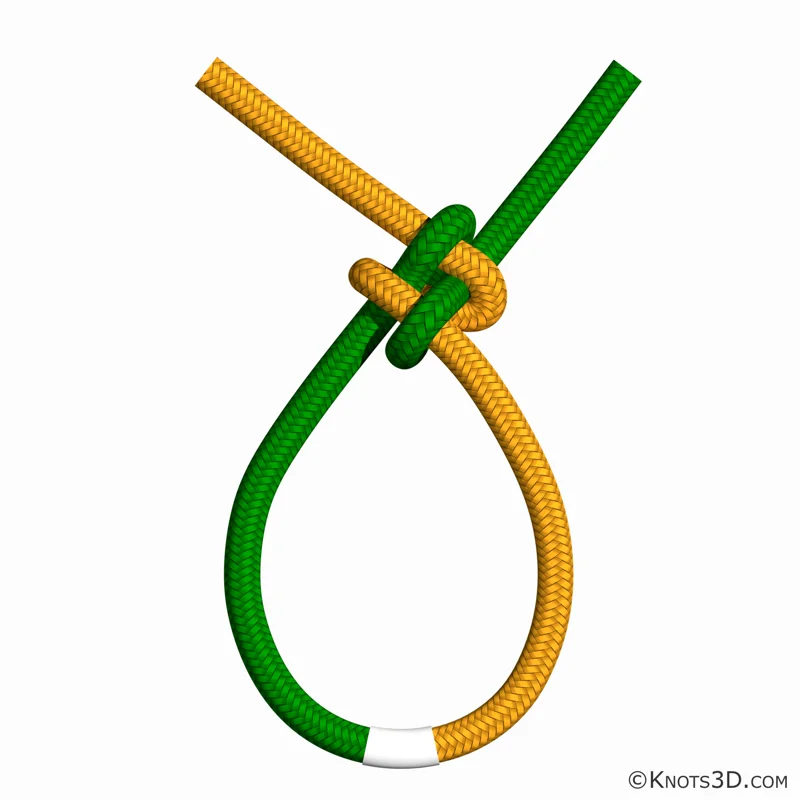
Scouts use the Friendship Knot to tie off their neckerchiefs(also known as neckers or Scout scarves). It is used in Chinese knotting, as a lanyard knot and as the starting knot in many Boondoggle and Scoubidou craft projects.
History
This is one of the eleven basic knots of traditional Chinese knotting, a craft which began in the Tang and Song Dynasty (960–1279 AD) in China. The Chinese and Japanese names for this knot are based on the shape of the ideogram/kanji for the number ten ('十' pronounced 'shi' in Chinese and 'juu' in Japanese), which is in the shape of a cross that appears on one face (and a square on the other face). In recent years, it has become popular with members of the Scout and Guide movements for tying their neckerchiefs instead of using a 'Woggle' and symbolizes the bond of friendship.
Structure
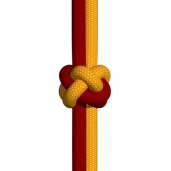
The Friendship Knot can be tied in a single 'rope' as with a neckerchief or with two (often different colored) strands as with Boondoggle and Scoubidou.
Related
Common Uses
- tie a scout neckerchief neatly in place of a slide.
- symbolize friendship between scouts at gatherings or events.
- fasten a scarf or bandana with a decorative knot.
- create a decorative lanyard knot for paracord projects.
- begin a boondoggle or scoubidou craft project.
- make a decorative spiral pattern with cord for a bracelet or lanyard.
Found in

